Showing posts with label Railroads. Show all posts

Wednesday, February 16, 2011

Lawrenceville Greenway Circulator

First,
Slow Clap to the Mayor, and URA for this plan.  It’s a great start to making the city more dense with development once again (and green development at that).  This new green development conjures images of Portland and other urban oases. 


As with any re-development plan (unless you’re a sprawling city) the key is to integrate transit options other than automobile based to increase mobility into and out of your new development.*

This newest plan for Pittsburgh’s new riverfront development certainly addresses these issues.  AVR’s branch to 26st street in the Strip has been planned for integration into the development as part of their already proposed commuter rail and also includes an at-grade “trolley circulator” which would traverse Smallman St.  and Penn Ave.

I’ve talked ad-nauseum about AVR’s commuter line (although I will address the addition of another commuter line later).   As a result I’ll focus more on the at-grade trolley topic as well as an oft ignored topic here in Pittsburgh; the water taxi. 

Trolley Circulator

In my mind, you wouldn’t have to do anything to the strip and it would already be a great idea for a tourist centered trolley.  An at grade line on Smallman St. from saaaayyyy the Heinz History Center to the 31st St. Bridge would be great to move people in the Strip on weekends. 

As such it only makes sense that this idea would be incorporated into this riverfront plan.  As written in the proposal, this line would start at the David Lawrence Convention Center and travel at grade up Smallman St. to the 40th St. Bridge, where it would then loop onto Penn Ave back to approx 21st St. where it would rejoin the ROW on Smallman back to the David Lawrence Convention Center. 

As I said before; solid idea.  I also realize that this is just a proposal for the entire project and as such doesn’t go into too much detail on the transportation aspects of it.  However, there are some issues that should be discussed and ironed out.  

First, check out this great primer for streetcar systems over at the Transport Politic.  

There have been a number of streetcar systems established in the U.S. within the past ten years.  What’s even more promising is that some of these have built a successful nitch in traditionally non-transit friendly areas, such as Tampa’s TECO Streetcar and Little Rock’s River Rail. 

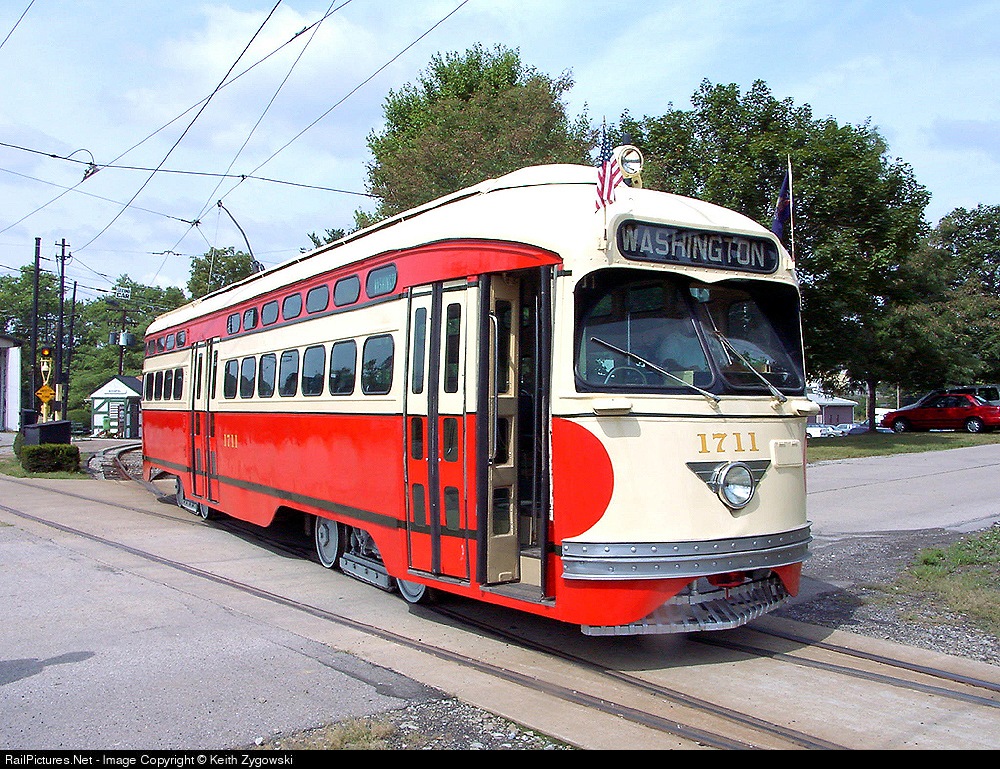
These and other systems have capitalized on the nostalgia aspect of trolleys.  Many lines use either heritage equipment (like San Francisco’s fleet of PCC cars) or new equipment made to look old (like TECO and Little Rock).  It would bring back a lot of memories for Pittsburghers to see trolleys like this


 or this


There is certainly something to be said for marketing your operation correctly and nostalgia is certainly a good way to do it.  However, nothing beats ease of use and good inter-connection.  I like the idea that it spans the entire length of the Strip from downtown all the way to Lawrenceville.  It would be a great way for a Lawrenceville or Strip resident to get downtown or move between the neighborhoods.  

However, the key question which isn’t really addressed here is;  how do you get to the trolley if you’re not one of these residents?  What are it’s connections?  I know there is talk of another trolley circulator to Oakland but that’s a topic for later.  How will someone from the Southside, or the South Hills make use of this trolley without driving to a parking lot in the Strip or Lawrenceville?   The T would make a great connector, but with AVR seemingly going all the way Steel Plaza, that takes away that option. 

Additionally how will someone from Oakland, or Hazelwood, or East Liberty or Garfield get to this line without driving?

 It can be done, after all we’ve got the East Busway for the east end neighborhoods, and supposedly this commuter rail will be an option for people coming from the South, but how this will be integrated and implemented are important discussions that could make or break this operation. 

Lastly, I don't like the idea of putting it on Penn Ave.  I know the plan is to use the circulator to take cars off the streets, in particular Penn Ave. in the Strip.   As a transit guy, I know I’m supposed to believe that putting down rails will take cars off the roads, and I DO believe that.  However, I’m a realist and know a lot of people drive to the Strip on the weekends and that a lot of people will continue to do that as a lot of them are NOT city residents but in fact suburbanites.  I also know that it’s basically bumper to bumper traffic from about 25th St. down through 16th on a Saturday morning.  I think over time that will change but the change will not be immediate.  I think you can get nearly the same effect by putting two tracks in Smallman St. and letting Penn Ave alone.  That said:  it’s not a stake in the heart of the idea. 

The second issue is more of a practical nature.  If you have one track on Smallman and one on Penn, you are creating two at grade crossings of the AVR’s commuter line should it follow its proposed route on 26th St.  Two rail operations crossing at grade are more complex than a road crossing a railroad at grade.  It involves more circuitry, and electronic systems to accomplish.  Why do it twice within a few blocks, making redundant systems when you can do it once, on Smallman St?  You’re not chasing passengers away by having the route one block away with the relatively narrow blocks in the Strip, and you’re saving money on implementation and operating costs. 

Overall, I'm clearly on board with this.  I think it's a great idea and the Strip is a great place to do it.  However, there are some issues that will have to be fleshed out before this aspect of the Riverfront plan could be implemented.  


I was going to cover the additional circulator to Oakland in this post, but seems as though I am rambling and will probably cover that and the “proposed” North Hills to Hazelwood commuter line at the same time. 

Next up:  Water Taxi


*As an aside, that was a major failure with earlier re-development projects in the Pittsburgh area.  The water front is nothing more than a dressed up strip mall with oceans of pavement.  The South Side works, although denser development has few options for transit and no room for transit expansion.  

Monday, January 10, 2011

Should we add railroads to the list of Passenger Rail enemies?

A lot of HSR stuff in the news.  It’s no secret that Obama’s vision for a national High Speed Rail network is under attack.  Many newly elected officials are far from passenger rail fans.  Everyone’s heard about what’s happened in New Jersey, Wisconsin, and Ohio.  Meanwhile, what should have been a milestone event in Illinois turns out to have simply added more fuel to the anti-rail fire. 

While I do not buy in wholesale to the premise of the article, it brings up some very practical and real issues with the implementation of the Obama Administration’s implementation of HSR and with expansion of our passenger rail network in general.  The biggest and most interesting, in my mind, is the buy-in of the host railroad.  The article surmises among other things that Union Pacific may have “driven a hard bargain” to Illinois and Missouri in exchange for their cooperation with the project.  To me, when they say “hard bargain” they mean $$$.  By money I have a feeling they mean state contribution for upgrades to infrastructure including track and signaling equipment.    

I understand Union Pacific, like all freight railroads want to protect their profitability.  They make their money by moving freight, after all.  However, it’s disconcerting to see they are willing to accept negative effects to our national transportation infrastructure so they don’t see a reduction in their margins. 

The freight railroads, for the most part know they have a captive audience.  Most operating rights of way in this country are private and are owned by corporations.  Any public agency or partnership that wishes to expand service must cooperate with the freight railroads and basically must submit to whatever conditions the carrier lays out, or risk outright refusal to cooperate.  There are legal means to get around this refusal, but a profitable freight railroad is much better equipped to handle a potentially protracted court battle than a coalition using funding which is tight to begin with.  Also, let’s face it, a lot of transportation projects, especially rail projects often face significant opposition, and a public legal battle would not help the situation. 

We’ve seen similar issues here in Pennsylvania.  Look no further than the Keystone Corridor which on paper extends from Philadelphia to Pittsburgh.  In reality, the section from Harrisburg to Pittsburgh is little more than a line on a map.  Between Harrisburg and Philadelphia multiple electric powered trains per day whiz back and forth at maximum speeds up to 110 mph.  West of Harrisburg, a lone diesel powered daily train takes riders to Pittsburgh.  While the line from Philadelphia to Harrisburg sees only local freight service and is owned by the state, the line west of Harrisburg is one of two major rail arteries between New York and Chicago, and is owned by a private company (NS).  Even though there is room to expand (the line was once 3-4 tracks for its whole length, and is now 2-3) NS has gone on record saying that it will require significant investment from public sources for NS to buy in on any service expansion to Pittsburgh. 

Another example is the ongoing Commuter rail saga here in Pittsburgh.  This time last year, it seemed almost a foregone conclusion that Pittsburgh would be gaining two rail lines; one to New Kensington/Arnold via the AVR, and one to Greensburg via the NS.  By July however, NS’s tune apparently changed, as they became “highly unlikely to allow commuter trains on their tracks”.  As a result, we’ve gone from a dual line heavy commuter “system” to a single line light rail system.  While it’s impossible to know what changed, clearly something did. 

Freight railroad's lack of cooperation in allowing passenger operations on their rails is understandable but detrimental to our nation transportation network.  The only real way to get them to help is to force them to.  Unfortunately, that is a thorny subject.  A lot of people in this country don’t like when the Government tells companies what to do.  Additionally, just like every other lobby, there’s a lot of money behind the railroad lobby and any legislation forcing railroad compliance would have to fight not only political will, but good old fashioned money. 

I have to wonder what the answer is.  I for one don’t know.  It’s hard to see our national rail network ever expanding if railroads themselves will make it cost prohibitive.   

Wednesday, January 5, 2011

Mid-week Train Links

Here’s a couple of links I found today, both rail related.

First, in the total surprise department, the Trib issued a transportation (other than auto)  friendly column yesterday. 

Check it out here

Before you get too excited, links at the bottom of the page are a little less Bizzaro-Trib in nature.  After reading this article you can find out how “liberals” have been proven to be “stupid”. 

Enough attempted humor.  The article is dead on, and fits in well with what experts in transportation and infrastructure have been screaming into deaf ears.  Our transportation system is second rate and getting worse, because as we aren’t spending money to fix it and integrate it.  In this country, if it’s not about cars it’s a conspiracy against our Freedom, or some such nonsense.  While we are busy doing this:

See no evil

the rest of the world is improving its infrastructure, in this case its rail systems. 


SecondThis link comes from the Post Gazette.   Apparently the midst of a budget/funding crisis where the fare from every rider counts is the perfect time to practice Union tomfoolery. 

I am a pretty progressive person (especially when it comes to transportation, which should be no suprise) but there’s nothing like cutting off your nose to spite your face.  Apparently purposely screwing with people’s schedules and pissing off the riders is a great way to stick it to the man. 

What is this, kindergarten?  Grow up; you make a lot of money for what you do, and your employer is in a constant state of funding distress.  The last thing the Port Authority needs, and deserves is a black eye because some self-entitled workers want to stick it to them.  

Monday, December 20, 2010

AVR Commuter Rail Operations Part 3

Vehicles


The end is in sight! 
This final portion of my series on the proposed AVR Commuter line will cover equipment.  It’s been decided, for better or worse, that the AVR’s plan will not use an FRA-compliant heavy DMU, ala US Railcar.  Instead they will use a light DMU.  There are plenty on the market in Europe, and there are several operating examples in the United States

I’ve quoted the RiverLine a lot and they use a version of Stadler “GTW” line of vehicle.  This line is also used by Capital Metro in Austin, TX, and is the proposed vehicle for a new start up service in Denton County Texas

Other manufacturers with a foothold in North America include Siemens Mobility, whose Desiro design is used by Southern California’s Sprinter service and Bombardier whose Talent vehicle was chosen for Ottawa’s “O-Train”.

To be honest, that’s about the extent of the information.  Plenty of company propaganda, but little other information.  I’m not privy, of course, to pricing and what types of options the AVR would include, but if they’re married to a light DMU, then there are at least a number of options to choose from.  


Tuesday, November 30, 2010

AVR Commuter Rail Operations Part 2

Signaling

First off, in a different post I used the traffic light analogy when describing a railroad signaling system.  That’s partially right.  For a much better and in depth description of railroad signaling, and different types of railroad signal, check this out. 

As it stands right now, none of the current AVR line mentioned in this proposal is signaled.  Signals were removed from this route back in the PRR days.  This means not only that all the signals and associated relay equipment will have to be re-installed, but any other remotely controlled switches/derails*/automatic stops** etc.  and their associated relay equipment would have to be installed.  This is a normal cost associated with setting up a commuter operation. 

Additionally, special signaling would have to be supplied for the portion that runs at-grade on 26th street and on the Busway. 

Here’s the good news.  A local business getting the business.  Union Switch and Signal (a part of Ansaldo) has their headquarters in the city.  This sounds like a match made in heaven to me. 

The signaling concept is pretty easy and straightforward.  A light rail operation can use similar rules and signaling with a few modifications (mainly derails and Automatic train control devices).  Aside from cost, there is little that would be more challenging than a heavy commuter line, or any other light rail for that matter.

*Apparently derails are required at controlled points where a heavy rail operation interlocks with a light rail operation.  These devices will prevent an improperly directed train from entering  prohibited territory.

**  Automatic train control devices would be required at all interlockings.  If a train does not have permission to proceed through the interlocking (by the signal protecting the interlocking), then an automatic train control device would kick in and stop the train.  These devices require both rail vehicle modification and additional lineside equipment.  

Tuesday, November 23, 2010

While We're on the Subject...

Been doing a lot of writing about the FRA regulations dealing with light rail.  While searching for the regulations themselves, I found this interesting blog post.  It's a few years old, but informative and interesting nonetheless.

http://www.ebbc.org/rail/fra.html

Could the issues raised in the post indeed have something to do with how expensive/troublesome it has been to get our national passenger rail network off the ground?  I can't say for sure, but there are some interesting points brought up that would support that notion.

I found the portion on TOD and silent crossings to be particularly interesting (that's how you know if you're a transit nerd)

Monday, November 22, 2010

AVR Commuter Rail Operations Part 1

Ok,  I’m FINALLY getting to this.  I know there’s a lot going on, and a lot of it is negative.  I’d like to focus on something that is moving forward, at least for the time being.  I was going to do this in one post, but it got a little O.O.C. so it’ll be broken up into three. 

Dispatching

Before I get into the whole light rail/freight separation thing, we can get the “easy stuff” out of the way.  Dispatching of this operation would be vary very little from dispatching a “heavy rail” operation.  A dispatcher would oversee operation, line signals and manage the movement and protection of the trains.  The bigger question is who would run it.  I can’t say for sure if AVR has dispatching factored into its annual operating cost in its study of this service.  I do know that they will be on the hook for it.  I would be very surprised if CSX would take on this responsibility, and there’s no way the NS would get involved.  Additionally, as The Trib so wonderfully put it, they wouldn’t want to burden the Port Authority with any further responsibility, so the AVR looks to be on the hook for all operations including dispatching.  A cost issue, which must be taken into account is night-time operations.  If a signal system is installed (it would have to be) it can’t just be shut off at night.  It takes written FRA approval to shut down a signaling system.  That means that the lone night time train would require a third shift dispatcher.  Hardly an effective use of money. 

The next question is what operating rules they would use.  NORAC would make the most obvious choice, and is used by NJT on their RiverLine.  Most other rulebooks are railroad specific, but NORAC provides rules which are used by multiple railroads, especially in the Northeast/Mid Atlantic region. 

Time Seperations

I’ve talked a lot about light rail intermixed with freight traffic and I’m not a big fan of these types of operations, except in cases where the freight operating window is very narrow (think a few hours) because of the FRA requirement of a “temporal separation” between freight traffic and light-rail passenger operations.  If you’re going to run a commuter service, then in my mind it should be heavy rail, but that’s another discussion for another post. 

If this operation is envisioned to be a purely commuter style operation, then the separation called for by the FRA isn’t a big problem.  Passenger trains would operate mostly into the city during the day and out of the city at night.  Operations would end probably somewhere around 8 or 9 PM, allowing the AVR to serve its customers, and would then begin early in the morning. 

The problem with this is, however, it limits the operation’s effectiveness for TOD and also in getting people out of their cars on nights and weekends.  What’s the attraction to living close to transit that doesn’t operate when you need it (outside of work)?

If this operation is to be, as some have painted it, as an intra-city link to move people from downtown to the Strip/Lawrenceville area, then this could be a challenge (not to mention I question this operation’s value in that capacity).  A subsequent separation or several separations would have to occur on a daily basis for this to work.  For example, a certain portion of the line (say above Oakmont) could be made available for freight operation after a given time (10 PM for example), while the southern portion could remain off-limits to freight until a later time (1 AM, for example).  One problem with this, however, is that the northern portion of the line is isolated.  AVR trains must enter at one of two spots, the first around 33rd St. which uses their own rails, or via NS’s Brilliant Branch, which would require further trackage rights and an extended back-up move. 

To accomplish this, another window would have to be established, earlier, say after rush hour but before the “nightlife” kicks in.  Passenger operations would have to be banned entirely during this period and all passenger equipment clear of the line and properly secured.  The AVR could then enter the line and travel north towards New Kensington.  Once the train cleared a certain point (say a controlled point in or around Oakmont) AND a certain time was reached, passenger operations could then resume on the southern portion of the line until later that evening, when passenger operations would be suspended for the evening and the AVR could service customers south of Oakmont.  See the list below for a (hopefully) better explanation.

6AM to 7 PM-Passenger only operation.  No freight operation allowed*
7 PM to 8 PM-Freight only operation, no passenger operation allowed**
8PM to 1 AM-North of Oakmont:  Freight only operation, no passenger operation allowed. 
8PM to 1 AM-South of Oakmont:  Passenger only operation, no passenger operation allowed.
1 AM to 6 AM Freight only, no passenger operations   

Clearly it’s doable but complicated.  I’ve heard of an FRA waiver that could be applied for to allow simultaneous operation, but I don’t know how practical this is considering NJT’s RiverLine was supposed to be operated in this manner but could is still operated with the time separation after 6+ years of operation. 

*EDIT*
I did a little more digging and found out that the RiverLine is operating under waivers.  However, it's not as straightforward as I thought.  Apparently a waiver is required just to let freight trains use an interlocking or controlled point that has a physical connection to the RiverLine (ridiculous).  Additionally, it appears that a waiver is required for a freight train to even operate on a separate but parallel track to an active light rail track (also ridiculous).  New Jersey Transit and Conrail were approved for these waivers and are operating under them, but these waivers do NOT allow for freight traffic to operate on the same track at the same time as passenger traffic.

These waivers would certainly have an effect on AVR's operation.  The freight would have to enter at a controlled point, remotely controlled by a dispatcher.


View AVR Freight Connection in a larger map

 The AVR also has a track that continues over the Allegheny River and interchanges with the Buffalo and Pittsburgh at Bakerstown, PA.  Because this line (the former B&O Railroad P&W sub) sees freight traffic on an as needed basis and because there is a physical connection between this line and AVR's proposed service, a waiver would be required.

The whole issue of temporal separation could be avoided by dedicating one track to freight and one to passenger.  The line was at one time double track so it is possible, but again, some sort of waiver would be required.  


*This means that no heavy freight cars, engines or trains can move on or occupy any main track, and must be secured against movement

**This means that no passenger trains can move on or occupy any main track, and must be secured against movement.

Thursday, November 18, 2010

High Speed Fallout

There’s been a ton of talk about the changes in the political winds and how it’s going to affect transportation Western Pennsylvania.  Those winds have also been felt on the national level.  The shift to the right in other states has brought some potentially huge impacts to Obama’s national HSR plan and will impact the Pittsburgh region.

There’s a really interesting battle going on in Wisconsin right now.  The Governor-elect has pledged to end the HSR project and has asked the DOT to allow the state to re-appropriate the funds.  Additionally, TALGO had set up a manufacturing plant to build HSR equipment for Wisconsin and other states.  It appears that they stand to lose the manufacturer and the money ($810 million) if the governor follows through with his plans.  

Of a more immediate impact to the Pittsburgh region is the election of a new Governor in Ohio, John Kasich.  Part of his platform from the start was to kill the 3C Corridor.  He has pledged to keep this promise and end the project.  This is a much bigger blow to Western Pennsylvania than other HSR developments, as the next step after completion of the primary corridor was a connection from Pittsburgh to both Cleveland and to Columbus, creating a triangle of passenger service in Ohio.  For the last few years, Ohio has seemed more intent on getting better rail service to Pittsburgh than Pennsylvania was, and now that seems to have flown out the window as well.  As with Wisconsin, DOT Secretary Ray LaHood has vowed to take back all funding given to Ohio, to the tune of $400 million and put it back in the national HSR pot. 

This is immediately bad for Western Pennsylvania.  Our local transit system appears to be taking a huge nosedive, and it looks like our regional connections will remain status quo, at best for the foreseeable future.  Pennsylvania’s HSR grant this summer in relation to Pittsburgh was miniscule ($800K) and was only to do some very preliminary studies on the NS’s route from Harrisburg west to Pittsburgh. 

With our emerging ally to the west seemingly switching sides, and a further shift in our state government to the right (a traditionally un-friendly group towards transportation other than the automobile) it’s not looking good for the home team. 

Our one bright spot, at this point, is that the money appears to be going back into the pot.  It will take time to re-receive applications for appropriations and to go through the approval process.  While Pennsylvania does not have any “shovel ready” projects, perhaps we can use this bought time to advance our cause. 

Knowing our state government, I’m not holding my breath, but it’s a chance.  

Tuesday, November 16, 2010

AVR Commuter News

Fisrt things first, I am really going to finish my “expert” analysis of the AVR’s Commuter line, I swear.

In the meantinme…

The AVR Rail proposal has popped up again.  The city got a grant for redevelopment or greening of a ribbon of land heading from the Strip through Lawrenceville. 

Check out the article here.

.The total funding was $1.5 million.  It isn’t explicitly stated, but the most of the amount seems to be going to building the greenway.  Relocating sidings and industries is noted, but that seems to allow for the greenway, not to facilitate commuter rail.

Still, the fact remains that AVR’s commuter service was mentioned hand in hand with this.  Questions of funding still remain un-answered, and because there is currently no public money involved, there is no study or project plan available to the public. 

This is all well and good, but again, I see limited value in integrating this into the greenway.  I am not questioning the greenway or the value of building up our transit infrastructure, I am merely questioning the value of AVR’s proposal to making transportation better IN Pittsburgh.  A commuter style route to the suburbs is fine for, well, commuters, but not to bring residents to another neighborhood in the city.  What you'll most likely end up with is residents of the city using buses, driving or biking to reach this new development when all is said and done.  

Thursday, July 29, 2010

Breaking Down the AVR Proposal Part 1


I’ve been critical of AVR’s plan for commuter rail.  That’s not to say that there isn’t value to what they are doing.  With that in mind I’ve put together some of what I feel are issues/risks/opportunities for this proposal.  I broke the proposal down into construction and operation.  The first installment will cover construction and each section will lay out potential issues and opportunities (if applicable) 

Keep in mind as well, there is no public report available for this.  I’ve gathered my ideas and thoughts through articles and material available on the internet.  There are no concrete figures save the $171million “private loan” and the $228 million overall cost.  Beyond that, there is currently no detail available. 

Construction

Stations

There aren’t many major issues with the construction of stations from Arnold, PA to 26th St. in the Strip. 

There are just a couple of concerns that I think it is important to highlight.

Tarentum Bridge Stop:  One of the issues AVR has apparently taken with the current Commuter Rail study is the lack of a stop past the current end of track in Arnold, PA.  They want to extend the route, approximately a mile north along the river to a stop around the Tarentum Bridge.    


While I don’t have a problem with this in theory, geography makes implementation tricky, and probably expensive.  The east side of the Allegheny River under the bridge is just a thin strip of flat land, with a steep hillside to one side and the river to the other.  There is enough land for at least one track, as this is the former PRR Railroad Allegheny Division right of way.  The tracks are gone, but the right of way is still intact.  However, there is little room for a station with parking and multiple tracks.  Additionally, gaining auto access to this strip of land would be challenging.  If the designers envision direct access from the Tarentum bridge (which I am guessing they will), steep ramps will have to be built from the bridge.  These ramps will need to provide enough clearance for Tugs to operate underneath them.  It can be done, but it would be expensive.  Again, there is no word whether this cost is included in the $228 million figure quoted in the Trib/Post Gazette. 

Another option that could be used would be to either make an access road off of Lower Braeburn Road in Lower Burrell or move the station further north so that it would be situated at the bottom of Lower Braeburn Road.  Both of these have potential issues as well.  I am still not sure there’s enough room underneath the bridge itself for a station, even without using ramps off of the bridge.  Also, with the second option, you will lose the convenience option.  I am betting they are trying to capitalize on the ease of travel to the Tarentum Bridge and therefore maximize on ridership.  If people have to drive out of their way to get to a station that is isolated by geography then there is no real reason to spend the money to put it there.

26th St. Intermodal Terminal:  26th Street is a decision point for the AVR.  They will either keep to their ROW to 16th street, or leave their right of way at 26th St, travel at grade on 26th street and join the Busway on the far side of Liberty.  

If the latter is chosen, this point could become particularly important.  According to this idea, an intermodal terminal would be built at 26th street and the AVR would possibly interchange with an LRT line coming up from downtown (don’t ask me how this would happen…)

The nearby property owners will become important in this instance.  A light rail vehicle can’t just hang a left at an intersection and the Strip is filled with dense development..  To get an idea of what it takes to turn a light rail vehicle, see the below map.


  Land will have to be acquired and buildings potentially demolished.  This is sure to meet with resistance from local business/property owners.  This will add to the already expensive costs of terminal facility construction in an urban environment.

Right of Way Construction:

One advantage that AVR has is that of an existing ROW.  (ahh the joys of existing infrastructure).  They already own the property and the tracks.  All they have to do is upgrade it.  They will have to add stations, passing sidings, signaling, and probably upgrade the road crossing protection over what they currently have.  While still expensive, the hard part (ROW acquisition) is already taken care of. 

That is until…

you get to 26th St
As discussed before, the AVR may elect to continue using their right of way and easement to reach 16th St.  If this is the case, while not ideal for operations it is ideal from a cost standpoint. 

The other option would be to operate at grade on 26th St. across Liberty where it would run on (or alongside) the Busway to the Penn Center Station and onto Steel Plaza.  This option could end up being very costly, and may not be physically feasible at all. 


As I alluded to earlier, a train doesn’t turn on a dime.  The line would have to curve to meet 26th St, and again, would probably have to cross a privately owned parking lot.  The AVR would then need permission to dig up the entirety of 26th Street to lay rail.  This would involve closing off Liberty Ave and Penn Ave to dig up the pavement and lay rails. 

I don’t know the timeframe for how long these roads would have to be disrupted for or the cost to install rails and update the traffic control equipment (both for auto traffic and trains). 

The going gets tougher once across Liberty Ave.  There is currently a bridge across the NS Pittsburgh Line that buses use to access the Busway.  There is a grade after Liberty to get over this bridge.  If trains are to use this they must make sure the grade is not too steep to operate.  They also have to ensure that the bridge is rated.  Remember, Light Rail is a relative term (River LINE style cars are approx 20 tons) and they are crossing a highway style bridge.  Assuming those requirements are met the ramp will have to be dug up and tracks laid.

The next challenge is the Busway itself.  After having to emplace a hard right hand curve at the Busway end of the bridge, the line will have to deal with the Busway itself.  This is not privately owned and is owned by the Port Authority.  They must agree to allow tracks to be put into place on their route.  (There is also no indication whether PAT will or won’t be responsible for operating this AVR service).  Again, IF PAT agrees to this request, the Busway will have to be torn up and tracks laid.   As the route would near the Penn Center Station, there is more room and the two routes could operate parallel to each other. 

An additional problem would face this proposal south of the Penn Center Station.  Soon after the station, the T ROW into Steel Plaza goes underground and stays that way for the 1000 or so feet to Steel Plaza.  This would mean that diesel propulsion may not be practical.  At the very least cars would not be allowed to idle in Steel Plaza, and may not be able to be operated underground at all without an electrical back up or third rail system.  Although this would be a short distance requirement, it still would mean additional infrastructure and vehicle costs.  Also, tracks would have to be re-laid because of gauge difference. 

A final construction issue is future T service to the East.  I know it’s a pipe dream, but there has always been talk of making the East Busway into a T line.  Right now that possibility will always be there.  If you built a different gauge line in from the East, you are removing that possibility. 

It’s clear there are some challenges.  I like the idea of the line going all the way to Steel Plaza.  This line is unlikely to ever be able to link in with a like mode of transportation.  Giving people ready access to the T and East Busway to get elsewhere in the city is critical if this service is going to succeed.  It’ seems as though construction is feasible.  The question right now is; is it practical?  

Thursday, June 3, 2010

Back from the Dead

Ok, I wasn’t really dead, just consumed with life outside of blogging.
A lot has happened in a short amount of time with the planned commuter rail plan for Arnold/Greensburg.

The story first appeared here and has become significantly more complex in the mean time. Apparently, not only has AVR secured financing for the Arnold to Pittsburgh line, but they intend to move forward with it, and are at least exploring other options for its operation. i.e. potentially pursuing a River Line style (light) of operation vs. a WES or Tri Rail operation. (heavy).

I’m not sure what to think of this. If you read the AVR proposal they have their own ideas on implementation, and basically don’t care what Allegheny or Westmoreland County think.

I can see two perspectives on this:

-AVR is trying to grease the skids so to speak. They (as I am) are not impressed with the pace of the overall project while costs escalate and the Rte 28 project progresses. Because this news is so out of left field I would not be surprised if this is in fact the case. This is what I hope is really happening. In fact, I hope it works. We’re on our tenth year of talking about this, and I see this having the potential to go the way of every other transit project in Pittsburgh if action is not taken.  (That place is no where)

- AVR is serious about this propsal.  I REALLY hope that they aren't serious about their proposal. I say that because a light rail style of operation, whether diesel or electric severely limits its interaction with either a Greensburg line operation or Bill Peduto’s shuttle, or any other standard rail line for that matter. Currently, operations such as the River Line must be segregated, by time from heavy operations. Meaning, if light operations occur from 5 AM to 7PM for example, then no heavy trains can operate on that trackage during that time and visa verse. This is fine for the AVR tracks, but not good for tying in with the NS (Greensburg) or Amtrak/CSX (Peduto Limited). If the AVR gets their way, then their operation will be forced to be a stand alone operation, even if some other commuter operation would come to fruition. Basically, you would have yet another mode of operation that does not tie in well with any other operation. That greatly decreases the operation’s effectiveness and chances it could operate successfully. No word on whether they expect to receive operating subsidies, or whether they expect to be able to operate at a profit.

Saturday, August 29, 2009

Low Cost Alternatives

Pennsylvania's submission is in. Politics and Place and Green is Good beat me to the punch, so I won't rehash what they have already capably covered, EXCEPT to say, Keystone Corridor West…really? Don't patronize us. If you have no real plans of making it a corridor, don't call it one. I can call the Turtle Creek Industrial Railroad the "Export Corridor", but that doesn't change what it is. The same can be said for the "Keystone Corridor West"; you can call it a corridor all day and all night but to PENNDOT, it's a freight railroad with 1 passenger train each direction every day.

Enough Ranting…Instead I want to make a pitch for more "standard" service. Despite the problems of the late "Steel City Flyer" I do believe the market is there for greater service. In 2008 the Pennsylvanian's ridership increased 12%, and increased another 1% in the first half of 2009 (I know 1% is hardly stellar, but not bad when you consider that overall ridership on Amtrak has slipped from the huge increases in 2008).

Combine the increases with the fact that there are some holes in the current service and you get the opportunity for more service. Someone cannot take a train from Pittsburgh (which leaves at about 7:20 AM) go to Harrisburg or Philly, and expect to get anything done that day and return on a later train to Pittsburgh. The same goes for anyone traveling to Pittsburgh from Harrisburg or Philadelphia. In fact, that is even worse. If you have business in Pittsburgh, better be ready to make a 3 day trip! If your business takes place on Tuesday, you'll be leaving Monday afternoon in order to arrive on Monday evening. I hope your business takes all day, because your next opportunity to head east will be on Wednesday morning.

The bottom line is, we can do better, and do it for a lot less than an electrified HSR system*. The track is there, the signaling is top notch (used by 60+ freight trains a day). If you think said 60+ trains a day are a problem, consider a quote from an NS exec who when asked about the Pittsburgh Line in a Trains Magazine article from 2005 said that "We've Got Room to Grow". He is right. Most of the right of way from Pittsburgh to Harrisburg at one point had more tracks than what they have now. That means, if need be, another track could be put in place. This would certainly minimize interference between freight and passenger trains.

We, as a state could foot part of the bill and have Amtrak operate it, much the same as the Keystone Corridor, Lincoln Service, and Downeaster, to name a few. That would save on rolling stock costs. If we wanted to get crazy, we could follow the path of Vermont who has been pursuing DMU's for its Vermonter service. Everybody knows where I stand on DMU's. They're FRA approved so they could operate with freight trains. Additionally, they're cheaper to build and maintain than traditional trainsets.

This is by no means hard analysis, but it can be done, again maximizing existing infrastructure in order to save construction/operating costs. Pennsylvania would be doing its own citizens a much better service by committing to lower level but more frequent service instead of wasting a few million here and there every few years to study HSR west of Harrisburg with no real intention of ever building it.


*I haven't changed my position on HSR, and would support it if PENNDOT ever got serious about it west of Harrisburg. However, since they don't seem to be serious at all, we should at least get some form of transportation investment west of Harrisburg.

Wednesday, August 26, 2009

A Perfect Storm for Public Transportation in the United States?

The Good

The last two years have been an exciting time if you are an advocate of public transportation in the United States. Among other things, we have seen a major spike in gasoline prices, and although they seem to have stabilized somewhat have pushed people away from their personal automobiles and towards alternate means of transportation in record numbers. Case in point: Amtrak saw a 14% increase in ridership between July 2007 and July 2008. The poor economy has eroded some that increase, but ridership is still higher than it was at this point in 2007. It's also important to keep in mind that this is with a smaller system than Amtrak has ever had along with stagnant funding. Check out the master list vs. what service is in place today.

Ridership on public transit is up. Way up. In 2008, transit ridership was the highest since 1956! That's big. That's 52 years of highway dominance, out the window in one year.

Additionally, the winner of the 2008 Presidential campaign brought even greater hope by promising to invest in our long neglected transportation system along with our national infrastructure. This promise was highlighted by the symbolic train ride that the President-Elect and Vice President-Elect took from Philadelphia to the inauguration in Washington, D.C.

Things sure are good in the transportation world aren't they? Not so fast. Some big issues in America right now are forming together with the record success of transit to form a perfect storm of sorts that threatens to hamstring transportation development in this country, if not set cause a massive setback.

The Bad

While transit use is up, which is great, funding remains flat. Check out an article here in the Post gazette that touches on the issue. Local transit authorities are faced with increased demands on their infrastructure and calls for service expansion all while dealing with the same funding levels that they dealt with 5 years ago. In some cases, because of the hard economic times funding has even been cut, again, while ridership increased. The system is broken, that's not news. The Gas Tax hasn't increased in 16 years and the Highway Trust fund is broke. You can't get better transit if you don't have the money to pay for it.

The Ugly

The healthcare debate, among others swirling around Washington seem to have caused enough strife to further the notion that our current funding strategy will suffice for another 18 months. The Post Gazette covers it here . It doesn't take a rocket scientist to figure out that if the funding system doesn't work now, it will continue to not work for another 18 months. Things will stay about the way they are now. Ridership looks to stay high, and funding will be inadequate which will cause further cutbacks and potential fare increases.

Hope isn't completely lost for a new funding package before the September 30 deadline of the current deal, but an 18 month delay could cause a permanent halt to a funding overhaul and renewed emphasis on transit.

The political tides seem to be shifting. The tremendous support that the Obama administration and their policies enjoyed may be at least wavering. The Senate Committee charged with appropriating the initial $4 billion dollars of HSR funds decided only to appropriate $1.8 billion. While this is not the end of the discussion, the figures initially discussed are already being paired down. This does not bode well for future HSR funding. The same can be said of transit funding. If support for HSR is still high and the money is being cut, imagine what happens when the support dies down, or gas prices come down.

I don't want to be a Negative Nancy here, but in my mind, we as a nation are at a crossroads. The demand for transit is there (and hopefully will continue to rise). What is missing is political will. If we put transportation in the back seat and don't fund it now and fund it properly, our best case scenario is we will have what we have now. Aging infrastructure, too many roads, and not enough alternate forms of transportation. That's the BEST case scenario.

Monday, July 13, 2009

Stillborn

I have had some questions about and concerns about where the State of Pennsylvania stood on HSR. Now, I'm pretty sure that I have my answer, and I don't like it.

The Transport Politic did a post about the initial requests for HSR funding that were to be submitted last Friday. He broke it down into two lists, confirmed requests, and probable. While states like Arkansas (progressive state that they are*) and California have already submitted applications, and states like Alabama/Mississippi (again very progressive states**) are likely candidates to submit for funding, Pennsylvania is notably absent from that list.

While Transport Politic's post is not the final absolute list, the lack of any information coming from any source (be it news or government) in Pennsylvania pretty much sums up our status. I think the silence is more frustrating than being told flat out that Pittsburgh to Harrisburg HSR is not even a concern for ______ reason (budget issues, don't care, etc).

I would also be a little less upset about this if there were some alternate plan or "consolation prize" such as a few more trains between Harrisburg and Pittsburgh and or Pittsburgh and Cleveland.

It's not over, and there are more rounds of funds scheduled to be made available later. However, future funding from the Federal Government is never a sure thing.

At this point, it's hard to even say if there are any plans by Pennsylvania to apply for funding now or in the future.


*Sorry Arkansas, but you are kind of trashy
**Sorry Alabama and Mississippi, but you are kind of trashy too

Tuesday, July 7, 2009

DMU Update 2

I found out recently (by way of the Commuter Rail Report) that the United States may be back in the domestic DMU business. A company calling themselves U.S. Railcar has indeed bought the design and is moving production assets to a facility near Columbus, Ohio.

They are planning on re-commencing production sometime later this year. Additionally they are planning platform enhancements, the largest of which would be a new top speed of 125mph. (Pretty smart if you ask me, that gets them at least a mention for our new "HSR" network.) No word if there are any active or anticipated projects currently in the works.

Pittsburgh's Perspective
Hopefully this will change the finding of the report that DMU's would be considered for the AVR segment only. The whole point of this DMU design is to meet CFR 49 regulations for crash worthiness. The whole point of meeting this regulation is so that a DMU can operate co mingled on the same track at the same time as freight trains. This makes them a great idea for integrating with the heavy NS freight traffic on the Pittsburgh Line.

In fact, if there were some logical reason for the researchers suggestion of only pursuing DMU's on one segment of the system, it would make more sense for them to do it on the Greensburg Line. DMU's are smaller (capacity wise), and less expensive than traditional trainsets. The Greensburg Line has a lower forecasted ridership and according to the report would use shorter trainsets (of a single car and an engine). Why not get the most for your money? The DMU would maximize the amount of space used for a lower price than a trainset.

If trainsets are preferred for any operation, it would be for the Arnold/New Ken line as that has a higher forecasted ridership and a larger capacity trainset may make more sense (although I think you could argue that DMU's would more than suffice in that situation as well)

Time will tell, perhaps study #371 will reverse some of these interim findings.

Tuesday, June 30, 2009

Final Report Available

The WCTA has made the full commuter rail report available on their website. Check it out here. I haven't had the chance to read it, but I'm a dork and therefore am looking forward to reading it myself.

Also, I wanted to draw attention to the fact that the Westmoreland County Transit Authority is about a thousand times easier to deal with than the Port Authority. They kept me updated on the status of the report and unlike Port Authority employees are much more user friendly, and much less rude.

For background up to this point click here.

Wednesday, June 24, 2009

Our Neighbor to the Nor...err I mean West

Usually, most of the energy we Western Pennsylvanians focus on Ohio has to do with their terrible NFL football teams. When it comes to planning a new HSR SYSTEM, however, they are light years ahead of us. I talked a little bit yesterday about where various other HSR corridors stand, and because Ohio is our neighbor to the west, I wanted to focus a little more exclusively on them.

You could argue that Pennsylvania already has HSR (or at least a version of it) both on the NEC (Northeast Corridor) and the Keystone Corridor from Philadelphia to Harrisburg. However, we as a state seem to be pretty satisfied with that and have therefore become complacent (insert your favorite Harrisburg loves Philadelphia, hates Pittsburgh comment here).

They have become so complacent tht when I searched PENNDOT's website for "High Speed Rail" I got this message in reply. When I search for Ohio HSR, I found several websites, including All Aboard Ohio, which is a non-profit rail advocacy group which is very involved in making HSR a reality. Additionally, unlike PENNDOT, ODOT has an entire website devoted to their plan. Here's a summary of their accomplishments found on the "Ohio Hub" website*.

-Funding Requests have been completed and submitted for all four phases of the project
-A full report has been completed and includes:
  • Feasibility estimates
  • Capital and Engineering Costs
  • Operating strategies and operation costs
  • Ridership forecasts
  • Fleet Requirements
  • A number of appendices that tackle many of the practical issues including freight integration, funding and scheduling

Here's a quick summary of what Pennsylvania has done to secure funding to extend the Keystone Corridor to Pittsburgh:
  • Jason Altmire has said we need to begin work to secure funding to extend the Keystone Corridor or connect Pittsburgh to Cleveland
  • That's all
We may be better at football, but I sure am envious of what Ohio has done to position themselves towards the head of the line for HSR funding.

Pennsylvania is either happy with what it's got already or is completely distracted by the budget fight going on in Harrisburg. Ohio seems to want to include Pittsburgh in its plans but we have to assume that the State of Pennsylvania will have to involve themselves in some way shape or form. We, as a state can't sit here and think that Ohio is going to take care of everything for us. The Pittsburgh to Cleveland connection is phase 4 of the 4 in the project. I couldn't even estimate how long Phase 1 will take, let alone phase 4.

The last thing Pittsburgh needs is to be an isolated backwater to a budding HSR network.


*You could spend hours on this website, it has maps of the four phases, an archive of project related documents and reports, along with news concerning the project, and other info about HSR

Tuesday, June 23, 2009

Trainapalooza

In a town where transit related articles aren't always easy to come by, I got probably a little more excited than I should have to see three separate articles about commuter/HSR relating to Pittsburgh and Western Pennsylvania. I'll write more (especially about the HSR entries) in a later post, but just to get them all out there, here they are in no particular order:

Commuter Rail: In an apparent reversal from a previous article in the Post Gazette, the Greensburg line is apparently not dead. Additionally, the costs estimates came back less than expected(sweet). I'm still not sure how many more studies must be taken but at $208 million, these lines look like a steal (Thank you existing infrastructure). Also, for anyone interested, public comment will be held June 29th in Greensburg, and June 30th in New Ken. Hours for both are 6-9 PM.

HSR:
The Pittsburgh to Cleveland Connection: It's been stated by other bloggers that it would make better sense for Pittsburgh to connect to Cleveland (and Chicago) before it connects across the state to Philadelphia and Harrisburg. I for one, agree, and apparently so does Jason Altmire. In a meeting yesterday he said that a link between Pittsburgh and Cleveland is a "missing link" to Obama's proposed HSR system. Apparently, a connection between the two cities would be eligible for funding... however, before they can think about any corridor, they must begin to work on it. Leading us to our third trainapalooza article...

A slow start to HSR: California and several other corridors have a jump start on us for HSR funding. Although Philly to Pittsburgh has been designated an HSR corridor, that's about the only thing that has happened. Jason Altmire wants to take steps forward to begin working towards HSR corridors to and through Pittsburgh, although no concrete steps have been outlined.

Monday, June 1, 2009

Too late to help 28?

As time slooooowly passes between the myriad of studies and actual construction on a commuter rail line between New Kensington and Pittsburgh, I am constantly reminded why I think this commuter line is a good idea. I am also constantly frustrated by the fact that if it weren't for the 42,352 studies that were required, maybe this rail line could already be doing some good.

A major justification for this commuter service is the fact that the line parallels route28, 28 is busy, and 28 is undergoing some major construction (translation, Route 28 is a pain in the arse). Apparently, now 28 outbound will be closed through October. However, if the service doesn't begin operation until AFTER construction is completed on 28, then that reason loses a lot of its luster. I know this latest round of construction is not the last for 28, but the overall improvement project is supposed to continue through 2010. Even if the 28 project is delayed (as it most likely will be), there is yet to be any kind of target date for the commuter operation to start.

I know a major transportation project like a commuter line can't be made to "turn on a dime". The time from inception to operation is long. However, in the case of this project, and many others in Pittsburgh, that time becomes even more drawn out. The first study for this project was completed 9 years ago in 2000. Here we are in 2009 and the same study has just been completed...again. It's not like they had to acquire right of way begin new construction of a rail line. That's nine years that the same right of way has sat there seeing under 10 trains a week.

I do realize a couple of important caveats:
#1. I'm sure the information from a 9 year old study could be seen as out of date, especially by opponents of the proposed project.
#2. 2000 was not the transit friendly environment that 2009 is. In 2000 gas was cheap, the economy was doing well, and global warming was nothing more than an outdated buzzword from the 90's.

This project isn't the only one in Pittsburgh to languish for years. The first one that comes to mind is the Spine Line. The first study took place in 1993. It's now 2009 and we have a tiny little piece of what was supposed to be and the price just keeps climbing on finishing it off. Let's say, for sake of argument, that an LRT Spine Line to Oakland is finished in 6 years (very optimistic, I know). That would put it at 2016. Think about that, 23 years to get at most 5 miles of new track.

I'm certainly not trying to say that if the rail line doesn't commence operations before this 28 project is complete then the line will be a waste. However, I see the operation losing out on some major opportunities, like being able to gain more riders early on and helping to reduce construction delays along 28. The way transit projects in Pittsburgh seem to run, I will be happy to have anything at all!

Thursday, May 28, 2009

DMU Update

This post appeals to the technical geek within the history major that is me. As part of my in depth and hard hitting series "My Idea for Heavy Rail in the East End Part 7" I wrote about potential rail vehicles for this new commuter service. One big issue was the fact that Colorado Railcar had gone out of business. They were, up until their demise, the only manufacturer in the world who produced an FRA crash worthiness compliant DMU.

I wanted to follow up to see if their have been any developments because this could have a significant impact on an commuter operation from New Ken to Pittsburgh. By this I mean, if no compliant DMU could be found, whoever would operate the service (WCTA or PAAC) would have to consider either:

#1: Buying new full trainsets consisting of a diesel and passenger cars. (This is bad because it costs alot of $$$$$$$$$$$$$$$$$$$$$$$$$$$$$$$$$)

#2: Scrounging up used trainsets or RDC cars ( This could be expensive in itself and the equipment would require at least an overhaul, if not a full re-build. Using old equipment could also lead to increased maintenance costs and decreased publich perception of any service).

This update comes via a post from Seattle Transit Blog from last month. In an article about the last Colorado DMU which was shipped to Alaska Railroad, they mentioned a company called "Value Recovery Group" which is supposedly interested in purchasing the remaining assets of the company and resuming operations. I sent the company a message via their website asking if the information on Seattle Transit Blog is correct or not. No answer yet, but I just posed the question.

Again, their are international players as well, but it's hard to find any real information on whether their current product lines could be made FRA compliant or not. Again, I think it would be great for potential operations around the U.S. and especially Pittsburgh if the proven designs built by Colorado Railcar could be resurrected and produced again. I will certainly post again on this subject as more information becomes available.